

Infrastructure Construction Market to Grow to USD 7.76 Trillion by 2035 as Smart Infrastructure & Fiscal Stimulus Expand
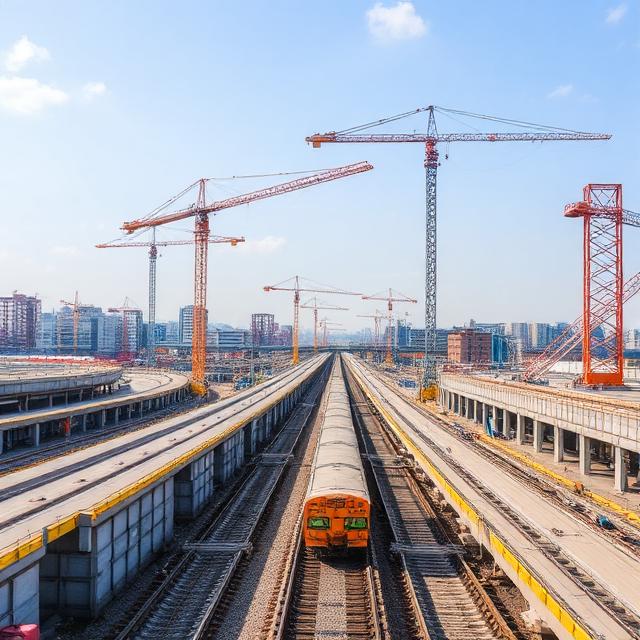
Infrastructure Construction
Asia-Pacific accounted for a 42.1% share in 2025, led by China, India, and Japan.
OR, UNITED STATES, July 17, 2026 /EINPresswire.com/ -- According to a comprehensive report by Market Research Future (MRFR), the global infrastructure construction market reached an estimated USD 4.05 trillion in 2025 and is projected to grow from USD 4.32 trillion in 2026 to USD 7.76 trillion by 2035, registering a compound annual growth rate of 6.72%. This expansion is anchored in multi-year fiscal commitments—the U.S. Infrastructure Investment and Jobs Act alone channels over USD 550 billion into roads, bridges, and broadband through 2030, while the European Union's REPowerEU plan redirects roughly EUR 300 billion toward energy and transport resilience.The Fiscal Stimulus Imperative: Government Spending as Market Architect
The single most powerful driver of the infrastructure construction market is sovereign spending. The U.S. Federal Highway Administration confirms the Bipartisan Infrastructure Law directs USD 550 billion in new spending through 2026, covering roads, bridges, broadband, water systems, and electric vehicle charging infrastructure. India's Ministry of Finance expanded public capital expenditure to INR 12.2 trillion for the fiscal year 2026–27, driving vast, bankable construction pipelines. China's 14th Five-Year Plan channels CNY 10.2 trillion into transport and water. Brazil's Programa de Aceleração do Crescimento (PAC) earmarks BRL 1.7 trillion for roads, sanitation, and energy through 2030.
These spending programs signal a structural shift from deferred maintenance to planned capital deployment. Unlike cyclical stimulus that fades with economic recovery, these are multi-year authorization cycles that provide contractor visibility spanning a decade or more. The infrastructure construction market is no longer subject to the boom-bust patterns of discretionary government budgets; it is entering a sustained expansion phase underwritten by statutory spending commitments.
The impact is visible across every segment. Transportation held a 34.0% revenue share in 2025, reflecting sustained rail and highway expenditure. Utilities are projected to expand at a 7.15% CAGR through 2035 as grid modernization accelerates globally. Social infrastructure—hospitals, schools, and civic buildings—accounted for roughly USD 972 billion in 2025. Extraction infrastructure, while smaller, is growing at a 5.48% CAGR as mining and oil & gas site development responds to the critical minerals supercycle.
Download Report Sample Copy with TOC: https://www.marketresearchfuture.com/sample_request/16136
The Digital Revolution: BIM, AI, and Drones Reshape Delivery
The infrastructure construction market is undergoing a generational shift in technology. Drone-based site surveys, AI-driven scheduling systems, and building information modeling (BIM) are replacing analog project management and paper-based permitting. The McKinsey Global Institute forecasts that full-scale digitization might result in yearly savings of USD 1.6 trillion for the building industry worldwide. Governments now require BIM in more than 40 nations for publicly funded projects that surpass predetermined thresholds, accelerating adoption curves and shortening delivery timeframes for water treatment plants, rail routes, and bridges.
Mandatory BIM implementation has reduced design-phase rework by 25–35% on average across UK and Singaporean public projects. The resulting schedule compression shortens overall delivery by 10–15%. AI-driven scheduling systems optimize resource allocation across multi-billion-dollar projects, reducing idle time and accelerating cash flow. Drones equipped with LiDAR and photogrammetry capture site conditions in hours rather than weeks, generating digital twins that serve as the foundation for construction sequencing and as-built documentation.
This digital transformation is not merely about efficiency; it is about capability. Projects that once seemed impossibly complex—underwater tunnels, seismic-resistant bridges, net-zero energy grids—are becoming feasible because digital tools enable precise simulation and optimization before ground is broken. The infrastructure construction market is expanding not just in dollar terms, but in the ambition of what it can build.
The Electrification Supercycle: Grid Modernization as Growth Engine
Aging utility networks require massive structural rebuilding to integrate clean power. The International Energy Agency's Electricity 2026 report states that surging electricity demand requires annual global investments in grids to rise by 50% by 2030. This wave of construction covers substation upgrades, high-voltage direct current links, and utility-scale battery storage installations. The IEA projects that global electricity-related spending is surging to USD 1.6 trillion this year alone, establishing a policy-insured demand layer for civil engineering, grid interconnectors, and utility-scale energy storage pipelines.
The European Commission's TEN-T regulation mandates the electrification of core rail lines by 2030, while China's National Railway Administration reports its high-speed rail network exceeds 45,000 km. These massive state-led expansions solidify long-term civil engineering and corridor construction pipelines. Electrified transport corridors are the fastest-growing sub-category within the transportation segment, as governments seek to decarbonize freight movement and reduce highway congestion.
Modular and Prefabricated Construction: Speed as Competitive Advantage
Off-site manufacturing of structural modules is significantly accelerating public works deployment. Singapore's Building and Construction Authority confirms that pre-fabricated pre-finished volumetric construction cuts project timelines by up to 50%. Standardizing these factory-built components reduces on-site labor requirements, opening a highly profitable, incentive-backed manufacturing segment within the broader infrastructure construction market.
Modular construction is particularly suited to repetitive infrastructure elements—bridge decks, tunnel segments, utility vaults, and rail sleepers—that can be mass-produced in controlled factory environments and assembled on site. This approach reduces weather delays, improves quality control, and compresses project timelines. As labor shortages intensify globally, modular methods become not merely advantageous but essential.
Climate Resilience: From Adaptation to Design Criterion
Escalating weather events require a major shift toward structural adaptation. The United Nations Environment Programme reports that approximately half of the global urban buildings expected to exist by 2050 are yet to be built or renovated. This creates a massive renovation-led pipeline for retrofitting flood barriers, heat-resistant materials, and seismic bracing. The infrastructure construction market is increasingly shaped by climate risk rather than climate aspiration—resilience is becoming a design criterion, not an afterthought.
Parametric insurance policies triggered by predefined weather thresholds—wind speed, rainfall volume, seismic magnitude—are gaining traction. These products offer faster payouts than traditional indemnity coverage, reducing post-disaster reconstruction delays. Contractors that can deliver climate-adaptive designs—elevated roadways, flood-resistant substations, heat-reflective pavements—are capturing premium positioning in procurement tenders.
Buy Now: https://www.marketresearchfuture.com/checkout?currency=one_user-USD&report_id=16136
Regional Dynamics: Asia-Pacific Dominates, Middle East & Africa Surges
Asia-Pacific accounts for approximately 42.1% of the infrastructure construction market, the largest regional share, driven by India's National Infrastructure Pipeline and China's ongoing urbanization drive. China alone contributes 48.2% of regional share, with Belt and Road domestic feeder networks and the world's largest high-speed rail system. India's 7.85% CAGR is among the fastest globally, powered by the National Infrastructure Pipeline targeting 25,000 km of new highway construction annually through 2030. Japan contributes USD 198 billion through seismic resilience and maglev rail projects, while the ASEAN bloc is growing at a 7.42% CAGR on metro Manila, Jakarta MRT, and Vietnam expressway investments.
Europe holds the second-largest share at roughly 22.8%, shaped by the EU's binding climate targets, which require member states to allocate at least 37% of Recovery and Resilience Facility funds to green objectives. The Trans-European Transport Network revision adopted in 2024 sets 2040 completion deadlines for core corridors, compelling frontloaded investment. Germany anchors regional demand through autobahn renewal and rail electrification at a 6.21% CAGR. The UK's HS2 and Northern Powerhouse Rail sustain USD 178 billion in market value, while France's Grand Paris Express metro expansion drives 14.8% of regional share.
North America holds 19.4% of global share, benefiting from multi-year federal authorization cycles that provide contractor visibility. The United States dominates with 78.4% of regional share, where the Bipartisan Infrastructure Law, CHIPS and Science Act, and Inflation Reduction Act create overlapping demand streams. Canada's National Trade Corridors Fund accelerates port and highway capacity projects, while Mexico's nearshoring corridor development sustains 8.4% of regional share.
The Middle East & Africa is the fastest-growing region at a 7.93% CAGR, as sovereign wealth funds in Saudi Arabia and the United Arab Emirates invest in massive projects. Saudi Arabia's Public Investment Fund has committed over USD 3.5 trillion in total project value under Vision 2030, making the Kingdom the largest single-country growth engine. The UAE's Expo legacy districts and Etihad Rail sustain USD 48 billion in market value. South Africa's renewable energy grid connections and Egypt's New Administrative Capital and Suez upgrades drive 5.81% and 7.15% CAGRs, respectively.
South America is valued at USD 275 billion in 2025, with Brazil dominating at 58.3% of regional share through the PAC accelerated growth program. Argentina's Vaca Muerta pipeline and road links sustain a 5.52% CAGR, while Chile's metro expansions and Colombia's 4G toll roads contribute to regional growth.
Read More about this Report: https://www.marketresearchfuture.com/reports/infrastructure-construction-market-16136
Competitive Landscape
The infrastructure construction market exhibits low market concentration, with the top five firms collectively holding an estimated 8–12% of global revenue. Fragmentation is structural: project delivery is inherently localized, and domestic licensing and labor regulations create barriers to cross-border consolidation. The Herfindahl-Hirschman Index sits below 200, indicating a highly competitive field with thousands of active contractors.
VINCI SA leads with an estimated 2.5–3.5% revenue share, distinguished by a vertically integrated concession-contractor model spanning roads, rail, and energy networks. The company announced a major push into hybrid infrastructure in January 2026, focusing on decarbonized transportation systems and digitized utility networks. ACS Group captures 2.0–3.0% through global reach via Hochtief and Turner subsidiaries, with strength in highways, airports, and PPP management. China State Construction Engineering (CSCEC) holds 2.0–3.0% through state-backed scale advantage in domestic and Belt and Road markets.
Bouygues Construction accounts for 1.5–2.5% with a strong European and African presence in civil works and rail. Bechtel Corporation captures 1.5–2.5% through mega-project EPC capabilities in LNG, rail, and airports, with private ownership enabling long-cycle project commitments. Skanska AB specializes in green building and sustainability leadership at 1.0–2.0%, while Fluor Corporation, AECOM, Strabag SE, and Larsen & Toubro each hold 1.0–2.0% through regional specialization and diversified portfolios.
Related Report
scandinavia construction market https://www.marketresearchfuture.com/reports/scandinavia-construction-market-25886
residential construction market https://www.marketresearchfuture.com/reports/residential-construction-market-25834
poland construction market https://www.marketresearchfuture.com/reports/poland-construction-market-25780
Construction Aggregate Market https://www.marketresearchfuture.com/reports/construction-aggregate-market-1545
Reconstruction Solution Market https://www.marketresearchfuture.com/reports/reconstruction-solution-market-12534
Construction And Demolition Market https://www.marketresearchfuture.com/reports/construction-demolition-market-12597
Market Research Future
Market Research Future
+ +1 855-661-4441
email us here
Legal Disclaimer:
EIN Presswire provides this news content "as is" without warranty of any kind. We do not accept any responsibility or liability for the accuracy, content, images, videos, licenses, completeness, legality, or reliability of the information contained in this article. If you have any complaints or copyright issues related to this article, kindly contact the author above.
